

Muse is Meta's personal AI agent, the one that doesn't just answer questions but actually goes and does the work, booking, buying, emailing, building, checking back in when it needs a decision from you. It launched on September 8, 2026, which in AI time might as well be years ago, because Meta has been changing it constantly ever since. New features, new countries, new tools it can connect to, a few stumbles along the way too.
So I'm keeping this page as a running ledger of the changes that actually matter if you run a business or use Muse in your day-to-day work. Every update gets a short plain-language summary and a note on what it means for you, because a feature list on its own doesn't tell you whether you should care. I use Muse hands-on myself, personally, inside the app daily, and I add to this page as new changes land, newest at the top. If you're trying to keep up without living on tech news sites, you can just check back here.
October 28, 2026
Muse launches in Singapore, its fourth country
The international rollout is picking up speed. Five days after Japan, Muse launched in Singapore, on iPhone, Android, and the web at muse.ai, making it the fourth country to get Muse in under two months. The local lineup is strong: Shopee and Lazada for shopping, Grab for groceries and dining, and Singapore Airlines, Agoda, Klook, and Trip.com for travel, alongside global connections like Gmail, Google Calendar, and Instagram, with the partner integrations rolling out progressively. One first worth noticing: Agoda is the first travel platform in the region with a live Muse connector, so travellers in Singapore and Japan can research and book hotels inside Muse itself. Most everyday use is free, with paid subscriptions for heavier use.
What it means for you: Each new country arrives with the local services people already use connected from the start, and that is the pattern to watch. If you have customers, clients, or audience in Singapore, Muse is now part of their day too, and the head start the rest of us got in September gets more valuable every time the map grows.
Sources: IAB SEA+India, Oct 28, 2026 and Agoda, via PR Newswire, Oct 28, 2026
October 24, 2026
You can talk to Muse out loud, and it talks back while it works
Live voice conversations with Muse have been spotted rolling out to users, with an onboarding screen that says "Give your Muse a voice." Instead of typing back and forth, you can hold a real-time spoken conversation while Muse keeps working on your tasks in the background. Meta showed this at its Connect conference in September, and as of this writing there has been no big official announcement, it's appearing in people's apps first.
What it means for you: Talking is faster than typing for a lot of people, and it makes Muse usable in the car, on a walk, or with your hands full. If it hasn't shown up in your app yet, that's normal for a rollout like this, features land account by account.
Source: TestingCatalog report, via FourWeekMBA, Oct 26, 2026
October 23, 2026
Muse launches in Japan, its first country outside North America
Muse went live in Japan on iOS, Android, and the web at muse.ai, with local integrations for shopping, travel, and payments alongside the global ones. It's the clearest sign yet that the US and Canada were the test market, not the whole plan.
What it means for you: If you have customers, clients, or audience in Japan, they can now use Muse too, which matters for anyone whose business crosses that border. For the rest of us, it's a reminder that anything you learn about working with Muse now is a head start most of the world doesn't have yet.
Source: Europasays, Oct 23, 2026
October 21, 2026
Meta says more than 10 million people have set up a Muse agent
On its third-quarter earnings call, Meta shared its first official Muse numbers: in about a month and a half, more than 10 million people in the US and Canada have set up Muse personal agents, about 25% of them use Muse on any given day, and shopping is the most common use, with people who shop through Muse averaging purchases over $200. Meta's leadership said the product has found its fit and the focus now shifts to growing it and building the business side of it.
What it means for you: This is the moment Muse stopped being an experiment. When a platform tells its investors the focus is shifting to revenue, business owners should expect more business tools, more shopping integrations, and more reasons for customers to arrive at your door through an agent instead of a search bar.
Source: Meta Q3 2026 earnings remarks (first-party figures), reported by TechCrunch, Oct 21, 2026
October 20, 2026
Hotels are coming to Muse
Cloudbeds, a platform used by hotels to run their bookings, announced an integration that will make its hotels discoverable inside Muse with live rates and availability, with bookings flowing through each hotel's own booking system as direct bookings. The US rollout is planned for early 2027.
What it means for you: If you run a hotel or any bookable business, this is the pattern to watch: customers asking their agent to find and book, and the businesses that are connected getting found first. Being bookable where the agents look is quickly becoming as important as being findable where people search.
Source: Lodging Magazine, Oct 21, 2026
October 20, 2026
Meta pauses Muse conversation sharing after a privacy finding
Muse let people share a conversation as a web page anyone with the link could open. Security researchers at a firm called Claroc found that the way those share addresses were built made the links discoverable through public internet records, and they were able to find roughly 6,800 shared conversations, a few of which contained sensitive business details people probably didn't realize were exposed. Meta paused the sharing feature on October 20 while it reviews how the links work. Only conversations people had actively chosen to share were involved, this was not a breach of anyone's private chats.
What it means for you: There's a habit worth building here, and I say this as someone who shares Muse work constantly. Before you share anything an AI helped you with, read it as if a stranger will see it, because with a public link, a stranger can. The pause is temporary, the habit should be permanent.
Source: TechBriefly, Oct 21, 2026
October 12, 2026
Muse Wonder arrives, a much stronger brain behind Muse
Meta released Muse Wonder, its newest and most capable AI model, along with a larger version called Muse Wonder Full. The models first became available to developers and through Muse Code, with Meta saying Wonder is coming to the Muse app, subscribers first. In plain terms, the thing doing the thinking inside Muse got a significant upgrade.
What it means for you: You don't have to do anything to benefit from a model upgrade, there's no settings page and nothing to install. What you should notice over time is Muse handling longer, messier, multi-step tasks more reliably, the cross-country move or the tangled business project instead of just the quick errand.
Source: Meta Newsroom, Oct 12, 2026
October 7, 2026
Muse comes to iPad, with a batch of new business connections
Meta launched Muse for iPad and added connectors for tools a lot of businesses already run on, including Asana, Figma, GitHub, Klaviyo, Zoom, Granola, and Notion, plus the ability to link a Meta ad account. Around the same stretch, Muse was the top free iPhone app for weeks after launch.
What it means for you: Every connector is one less app Muse has to work around and one more part of your business it can actually help with. The ad account linking is the one my world notices: it closes the loop between the agent and the ads so many small businesses depend on.
Source: 9to5Mac, Oct 7, 2026
October 7, 2026
Muse is coming to Windows computers
At a Microsoft event, Meta and Microsoft announced that Muse is coming to Windows PCs as a proper built-in app, using a Microsoft safety system that lets people control which files and networks an agent can reach. No release date was given.
What it means for you: If your office runs on Windows rather than Mac, your version is on the way, and the safety framing matters: the agent works inside boundaries you set, rather than roaming your whole computer.
Source: iPhone in Canada, Oct 7, 2026
October 2, 2026
Muse gets a smart-home bridge, the Home Link
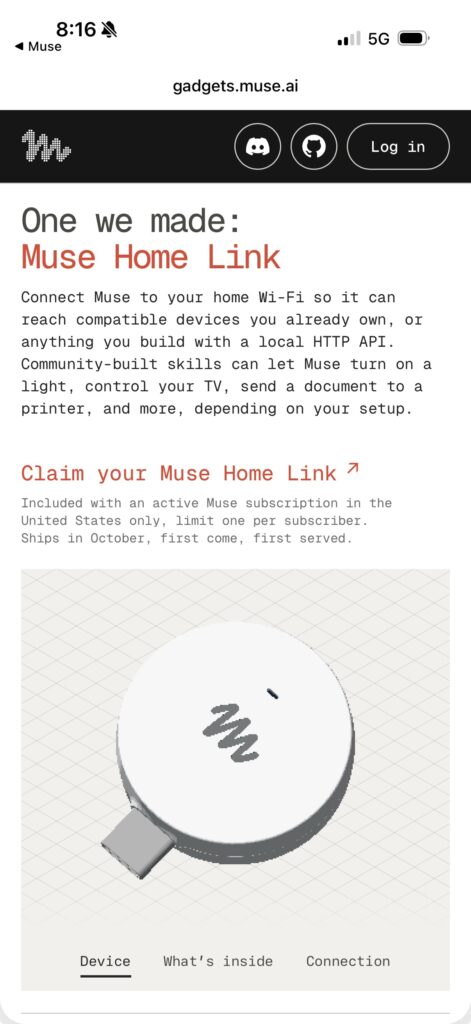
Meta launched Muse Home Link, a small device that connects Muse to your smart home, and made 5,000 of them available free to Muse subscribers. It also opened up a do-it-yourself gadgets program for people who like to build their own hardware, which most of us can safely admire from a distance.
What it means for you: Muse is moving off the screen and into the physical world, lights, locks, routines, the house itself. For most business owners this one is a curiosity today, but it shows the direction: one agent that follows you from your inbox to your front door.
Source: iPhone in Canada, Oct 2, 2026
October 2, 2026
Meta confirms Muse is coming to smart glasses
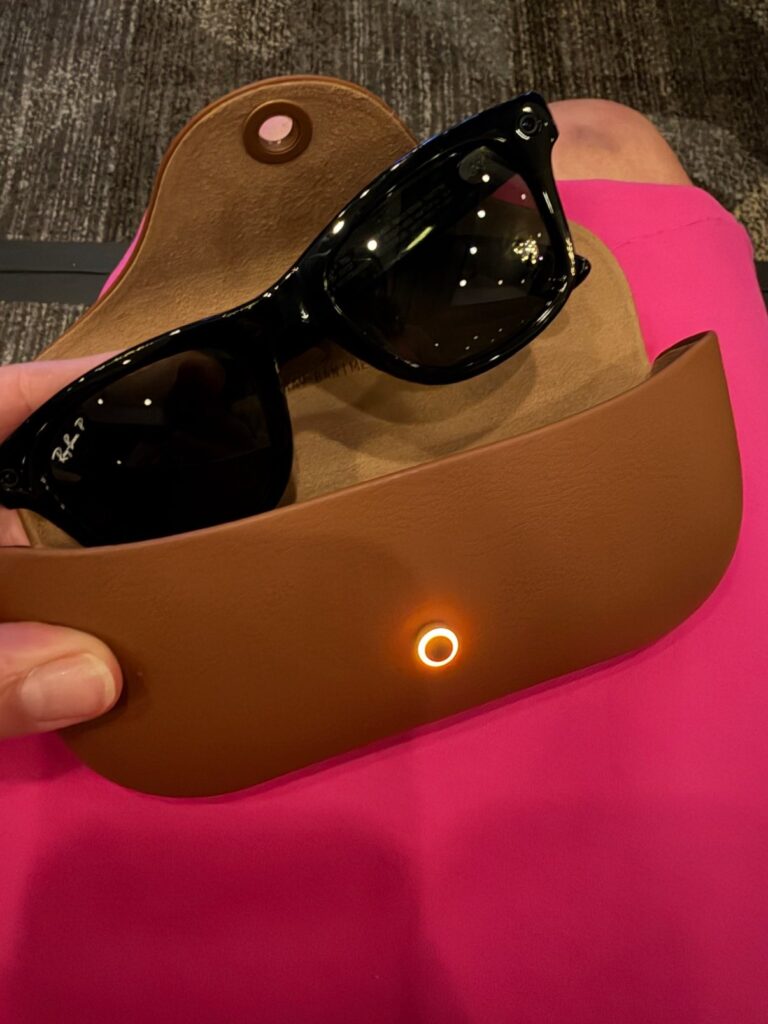
Meta first announced this at its Connect conference on September 23, 2026, and then confirmed it again on October 2: Muse is coming to Meta's AI glasses. You will wake it by saying its name, or a custom name you choose, with your phone staying in your pocket, and tasks you set in motion will keep running in the background until they finish and report back to you. Meta's own examples of what that looks like are wonderfully ordinary: making reservations, searching flights, finding a part you need, logging meals, talking you through a workout, and buying the item that is right in front of you. What Meta has not given yet is a date or a list of which glasses models get it first, and this entry will be updated the moment they do.
What it means for you: This is the entry to watch if you already wear Ray-Ban Metas or have been thinking about them. A Muse that can see what you see turns errands, site visits, and shopping into conversations instead of phone sessions, and for business owners who spend their days out of the office, that is a genuinely different way of working.
Sources: Meta's Connect announcement, Sep 23, 2026, via AI Market Watch and Meta's Oct 2, 2026 confirmation as reported by TechCrunch, via dev.to's AI Daily Digest, Oct 3, 2026
September 29, 2026
Muse for Small Business launches
Three weeks after launch, Meta made it official: people were already using Muse to run parts of their businesses, so Meta built for it. Muse for Small Business connects Muse to your Facebook Page, Instagram professional account, and Meta ad account, plus tools like Shopify, QuickBooks, Stripe, Canva, Slack, Dropbox, and Zoom. Meta designed it to help with analysing sales and marketing, drafting ads and content, reviewing expenses, flagging customer messages that need attention, and finding new customers. You can give it goal-level instructions, and nothing gets published, sent, or purchased without your approval. It launched in the US and Canada, free with usage limits, with subscriptions for heavier use.
What it means for you: This is the single most important entry on this page if you run a small business. Meta's own reasoning, and it rings true, is that small businesses are short on hours, not ideas. This is Muse aimed squarely at the hours problem, using the accounts and tools you already have.
Sources: Reuters, Sep 29, 2026 and TechCrunch, Sep 29, 2026
September 25, 2026
An early access program opens for new Muse features
Meta opened an early access program so interested users can raise a hand to try new Muse features before they roll out widely. Reporting at the time described signing up by simply asking Muse to let the team know you're interested.
What it means for you: If you like being early, and in this space early is a genuine advantage, this is the door. Early users learn the new tools while competitors are still hearing the names.
Source: TechCrunch, reported Sep 25, 2026, via the Muse launch timeline
September 23, 2026
At Meta Connect, Muse goes everywhere next
Fifteen days after launch, Meta used its Connect conference to show where Muse is headed. The announcements that matter most: Muse is coming to Meta's AI glasses in the coming months, where you'll wake it by saying its name and it can act on what you're looking at; Muse is getting its own email address, so you can forward it things or copy it on a thread; the Mac app gained the ability, with your permission, to operate other apps on your computer and keep working through a queue of tasks after you walk away; voice and a video avatar were shown in action; and a long list of shopping partners was announced, including Walmart, Best Buy, Gap, Sephora, and Wayfair, with Spotify joining the connector list too. Meta also launched a public challenge, #MuseMoneyChallenge, asking people to use Muse to save $1,000 by cancelling subscriptions, negotiating bills, and hunting down refunds.
What it means for you: Connect was Meta saying Muse is not a side project, it's the centre of the plan. The email address and the glasses are the two to sit with: an agent you can forward an invoice to, and an agent that can see the shelf in front of you, are both very different from a chatbot in a tab.
Sources: Meta Newsroom Connect announcements, Sep 23, 2026, via AI Market Watch and CellCog's Connect recap
September 23, 2026
Meta unveils Muse Charm, a pocket device that is all Muse
Closing the Meta Connect keynote in Menlo Park on September 23, 2026, Mark Zuckerberg pulled a small translucent device out of his pocket and told the audience: "If you're not wearing glasses, this is by far the fastest way to talk to your Muse." The device is Muse Charm: palm-sized, small enough to clip to a keychain, with a roughly 2-inch screen that shows Muse as an animated avatar, front and rear cameras, and its own built-in 5G connection, so it does not need your phone nearby. You press a fingerprint sensor in the corner and start talking, no unlocking a phone, no opening an app. Meta is targeting a December 2026 ship date, in time for the holidays, and Zuckerberg was upfront that only a handful of units have been built so far and the final materials are still being settled. No price has been announced.
What it means for you: Charm is Meta betting that some people want their agent within reach all day without wearing glasses or living in an app. Whether the device itself takes off is an open question, and the history of little AI gadgets is not kind, but the signal underneath it matters: Meta is building hardware around Muse, which tells you how permanent they intend this product to be.
Sources: Futurum Group analysis of the Connect announcement, Oct 13, 2026 and BBN Times on the keynote unveiling
September 21–22, 2026
Shopify checkout opens inside Muse, and more shopping partners line up
Shopify opened Shop Pay checkout across Shopify stores inside Muse, switched on by default for eligible stores, which means Muse can complete a purchase on a Shopify site in a smooth, one-flow checkout. In the same days, PayPal, Instacart, and Expedia all announced partnerships with Muse for payments, groceries, and travel.
What it means for you: If you sell through Shopify, your store may already be sellable through Muse without you lifting a finger, and it's worth checking how your products show up when an agent does the shopping. Customers are starting to buy this way, and the stores that are ready are the ones that get bought from.
Source: PYMNTS, Sep 22, 2026
September 20–23, 2026
Not everyone lets Muse in, Amazon and Insurify block it
The pushback started early. Amazon blocked Muse from completing purchases on Amazon.com starting the night of September 20, citing its rules for automated shoppers, and insurance comparison company Insurify blocked Muse by name on September 23. Meta's position is that Muse doesn't see your passwords or payment details, those go into secure storage, and that Muse checks with you before buying.
What it means for you: Expect a patchwork. Some stores and services will welcome agents because agents bring them customers, and some will block them, sometimes over real concerns and sometimes over who controls the customer relationship. When Muse tells you it can't complete something at a particular store, this tug of war is usually why.
Sources: GeekWire, Sep 20–21, 2026 and Insurify press release via PR Newswire, Sep 23, 2026
September 21–22, 2026
A Mac app security flaw is found, and Meta patches it within about a day
A well-known Mac security researcher found a serious flaw connected to the Muse Mac app's dictation feature and reported it to Meta. Meta confirmed the issue and shipped a fix in roughly a day. Nobody was reported harmed, and the speed of the patch is part of the story.
What it means for you: New tools will have bugs, including security bugs, that's the real trade of being early. What you're watching for is how a company responds, and a confirmed fix in about a day is the response you want to see. Keeping the app updated is your half of that bargain.
Source: Researcher report and Meta confirmation, Sep 21–22, 2026, via the Muse launch timeline
September 18, 2026
Muse launches in Canada
Ten days after the US launch, Muse arrived in Canada, announced by Meta with a cheerful "Made it to Canada. Where to next?" It climbed to the top of the Canadian App Store charts the same way it had in the States.
What it means for you: If you're reading this page, there's a decent chance this is your entry, the day Muse became something you could actually try instead of just read about. Canadian businesses got in near the front of the line on this one, which does not happen often with US tech launches.
Source: iPhone in Canada, Sep 18, 2026, via the Muse launch timeline
September 17–18, 2026
Muse for Mac lands, an agent on your actual computer
Meta released the Muse app for Mac, which goes a step further than the phone and web versions: on your computer, Muse can work across your files, messages, calendar, and notes, with dictation built in. (Coverage of the exact day splits between Sep 17 and Sep 18 depending on the outlet.)
What it means for you: This is where Muse starts feeling less like an app you visit and more like a staff member with a desk. Work that lives in documents and folders, the real paperwork of running a business, is exactly what the Mac version is aimed at.
Source: 9to5Mac and TechCrunch, Sep 17–18, 2026, via the Muse launch timeline
September 16, 2026
Muse can pick up the phone and call a business for you
Muse gained the ability to place outbound phone calls to US businesses, the ones that still take bookings and questions by phone because they don't have online systems. Early testers put it to work on exactly the calls nobody enjoys making.
What it means for you: Think of every phone-only task on your list, the restaurant that doesn't take online reservations, the supplier you have to call to change an order. And if your own business takes phone bookings, know that some of your callers are about to be agents, which is a very good reason to make sure a human answering the phone treats them well.
Source: TechCrunch, Sep 16, 2026, via the Muse launch timeline
September 8, 2026
Muse launches in the United States
This is day one. Meta released Muse, a personal AI agent, on iPhone, Android, and the web at muse.ai, for adults in the US. The difference from every chatbot that came before it is in the pitch: it doesn't just answer questions, it does the work. You describe an outcome, book the trip, find a cheaper bill, turn this list into an order, and Muse plans the steps, uses its own secure computer and browser, and comes back when it needs a decision or an approval. It launched with a free tier generous enough for most people, plus two paid plans reported at US$20 a month (Power) and US$100 a month (Maximum) for people who want more. It shot to the top of the App Store charts within days.
What it means for you: Everything else on this page flows from this date. If you've used the Meta AI chatbot inside Facebook or Instagram, this is a different animal, that one talks, this one acts. The approvals are the part I'd underline for any business owner: Muse is built to check with you before it sends, posts, or spends.
Sources: Morningstar launch-day report, Sep 8, 2026 and Meta product documentation.
September 2, 2026
Muse Spark 1.3, the model underneath Muse gets its third upgrade
Muse Spark is the AI model that powers Muse, and Meta updated it to version 1.3 in early September, the third update since the model first appeared in April. Most users never saw a headline about it, and that's fine.
What it means for you: The engine under Muse improves on Meta's schedule, not yours. You don't upgrade anything, you just notice, gradually, that the answers and the work get better. It's worth knowing the name Muse Spark, because it's the same model family you'll hear about in Meta AI and, soon, in the next entry down this page, Muse Wonder.
Source: Muse Spark version history
April 8, 2026
Muse Spark launches, where the Muse story actually starts
Five months before the Muse app existed, Meta released Muse Spark, the first AI model from its rebuilt AI division, Meta Superintelligence Labs. At launch it powered the Meta AI app and website, with rollouts into Facebook, Instagram, WhatsApp, and Messenger planned from there. It was built to reason through complicated questions, work with images, and use tools, and it was the first clear signal that Meta was rebuilding its AI from the ground up rather than patching the old one.
What it means for you: This is the foundation everything else on this page stands on. When people ask when Muse started, the app answer is September 2026, but the technology answer is April, and the gap between those two dates is the story of how fast this moved: a new model in spring, a working personal agent by fall.
Sources: JPMorgan launch research note, Apr 8, 2026 and TamilTech launch coverage, Apr 8, 2026
This ledger is updated as Muse changes. Entries are added at the top. If you're a business owner trying Muse for the first time, my standing advice is the same as it's been since September: start with one task you'd happily hand to a very capable assistant, stay the director, and keep your approvals on. Nothing happens until you say yes.
Keeping this page accurate is the whole point of it, and Muse changes fast. If you spot a mistake or an error, or something that's gone out of date, please let me know through my contact form and I will fix it. My goal is to keep this as accurate and updated as possible, and reader corrections are part of how that happens.
 Facebook
 LinkedIn